
Reverse Osmosis vs. Whole-House Filtration: Differences Choosing between reverse osmosis and whole-house filtration can feel confusing, especially because both are marketed as “better water.” The key difference is how each system treats water: RO uses a membrane to separate contaminants from water, while whole-house filtration typically relies on media or targeted treatment stages before water reaches your taps. In practice, RO is often best for drinking and cooking because it can reduce a wide range of dissolved impurities. Whole-house filtration is usually selected to improve water quality throughout the home and to safeguard appliances, fixtures, and plumbing—often by addressing sediment, chlorine taste/odor, or hardness-related issues. How reverse osmosis works Reverse osmosis forces water through a semi-permeable membrane under pressure. The membrane blocks many dissolved substances, including contaminants such as certain salts and other disso ... Read m...
Reverse Osmosis vs. Whole-House Filtration: Differences
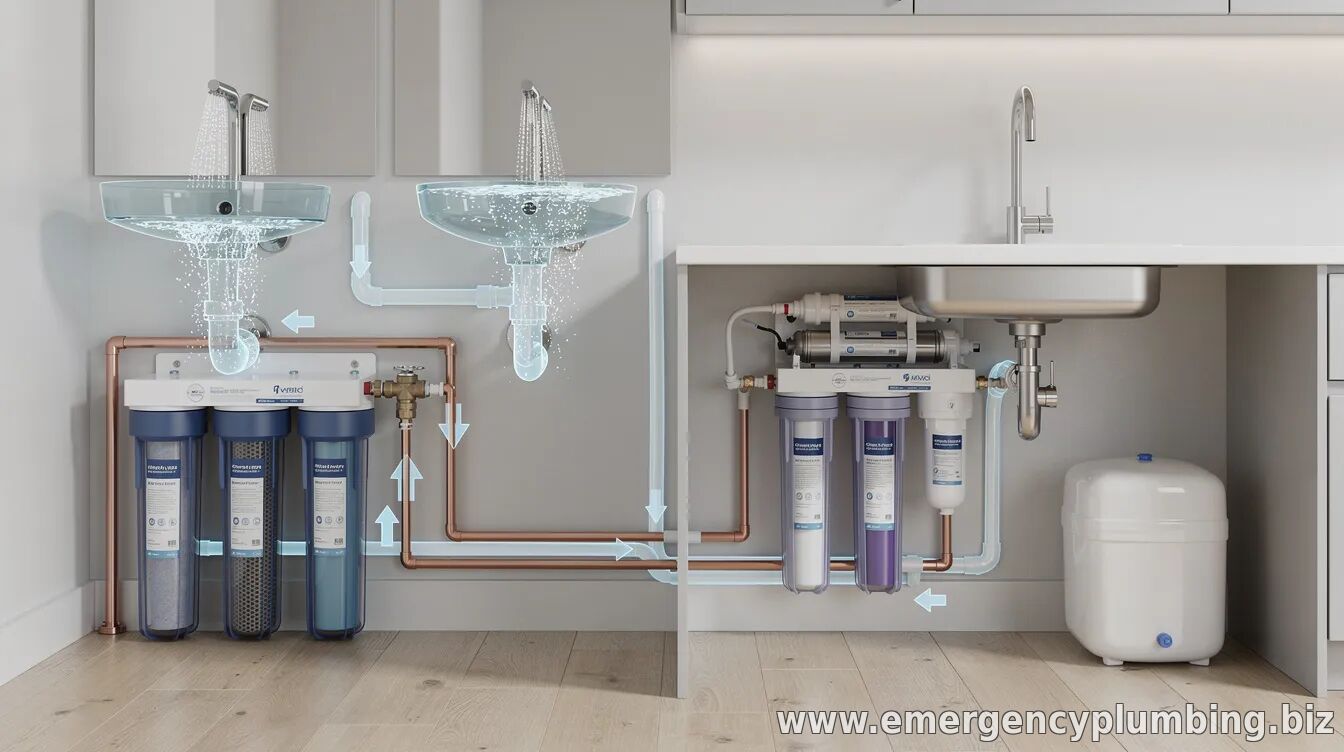
Choosing between reverse osmosis and whole-house filtration can feel confusing, especially because both are marketed as “better water.” The key difference is how each system treats water: RO uses a membrane to separate contaminants from water, while whole-house filtration typically relies on media or targeted treatment stages before water reaches your taps.
In practice, RO is often best for drinking and cooking because it can reduce a wide range of dissolved impurities. Whole-house filtration is usually selected to improve water quality throughout the home and to safeguard appliances, fixtures, and plumbing—often by addressing sediment, chlorine taste/odor, or hardness-related issues.
How reverse osmosis works
Reverse osmosis forces water through a semi-permeable membrane under pressure. The membrane blocks many dissolved substances, including contaminants such as certain salts and other disso ... Read more »
Comments
Post a Comment