
Main Sewer Line Backup: Emergency Steps Before the Plumber Arrives A main sewer line backup can cause sewage to rise in drains and toilets, trigger unpleasant odors, and—if ignored—lead to costly water damage. While waiting for a plumber, your best priority is to reduce contamination and prevent further backup . 1) Stop water use immediately To prevent more sewage from pushing back into your home, stop running water and avoid flushing. If you have an automatic ice maker or washing machine, turn off their water supply or pause their cycle so they don’t add more water to the system. 2) Keep sewage contained and away from living areas If you notice gurgling drains or rising water, close doors to affected areas and keep people and pets out. If possible, place towels or absorbent barriers around any spread points (without stepping into contaminated water). Avoid tracking water through the home. & ... Read more »
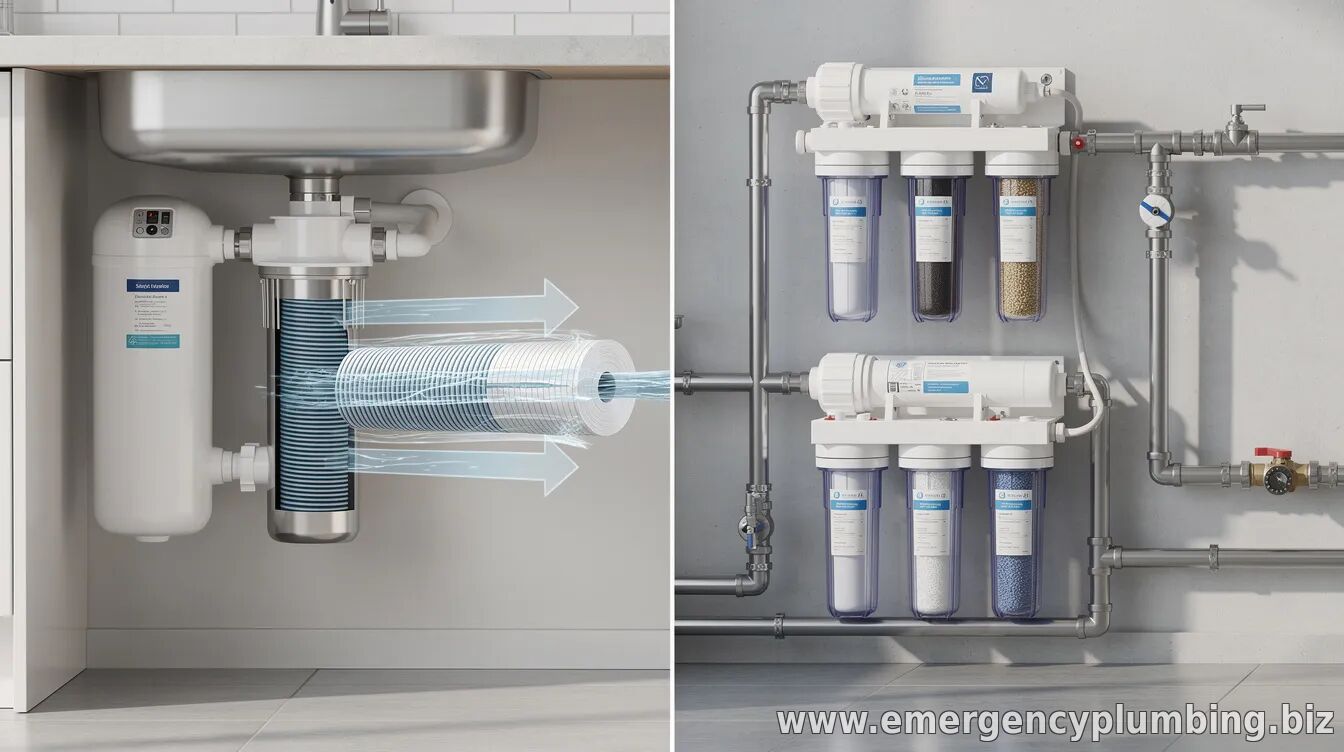
Reverse Osmosis vs Whole-House Filtration: Key Differences
Choosing between reverse osmosis and a whole-house filtration system often comes down to one question: What problem are you trying to solve? Both approaches can make household water taste better and reduce certain contaminants, but they differ in what they remove, where they work, and how they affect plumbing and long-term system costs.
Reverse osmosis (RO) uses a semi-permeable membrane and water pressure to separate dissolved impurities from water. Whole-house filtration typically uses one or more filter stages (such as sediment, carbon, or specialty media) to treat the water as it flows into your home.
How reverse osmosis works (and what it removes)
An RO system forces water through a membrane that allows water molecules to pass while rejecting many dissolved substances. Depending on the system design and pre-treatment, RO is commonly used to reduce contaminants like dissolved salts and some heavy m ... Read more »
Comments
Post a Comment