
Gas Leak Warning Signs Every Homeowner Should Know Homeowners don’t always get a clear alert before a gas leak becomes an emergency. While many gas lines are fitted with safety features, leaks can still happen due to aging equipment, loose connections, construction damage, or improper installation—making early recognition essential. Natural gas is typically odorized with a smell similar to rotten eggs (often called an “odorant” like mercaptan) so people can detect it. However, the strength of that odor can vary, and some people may be less sensitive to it over time. Treat any persistent gas smell as a potential leak. Common warning signs of a gas leak Several indicators can point to a leak, especially when they occur together. Pay attention to: A strong, persistent rotten-egg or sulfur-like odor near gas appliances, meters, or utility rooms Hissing, whistling, or roaring sounds coming from pipes, v ... Read more »
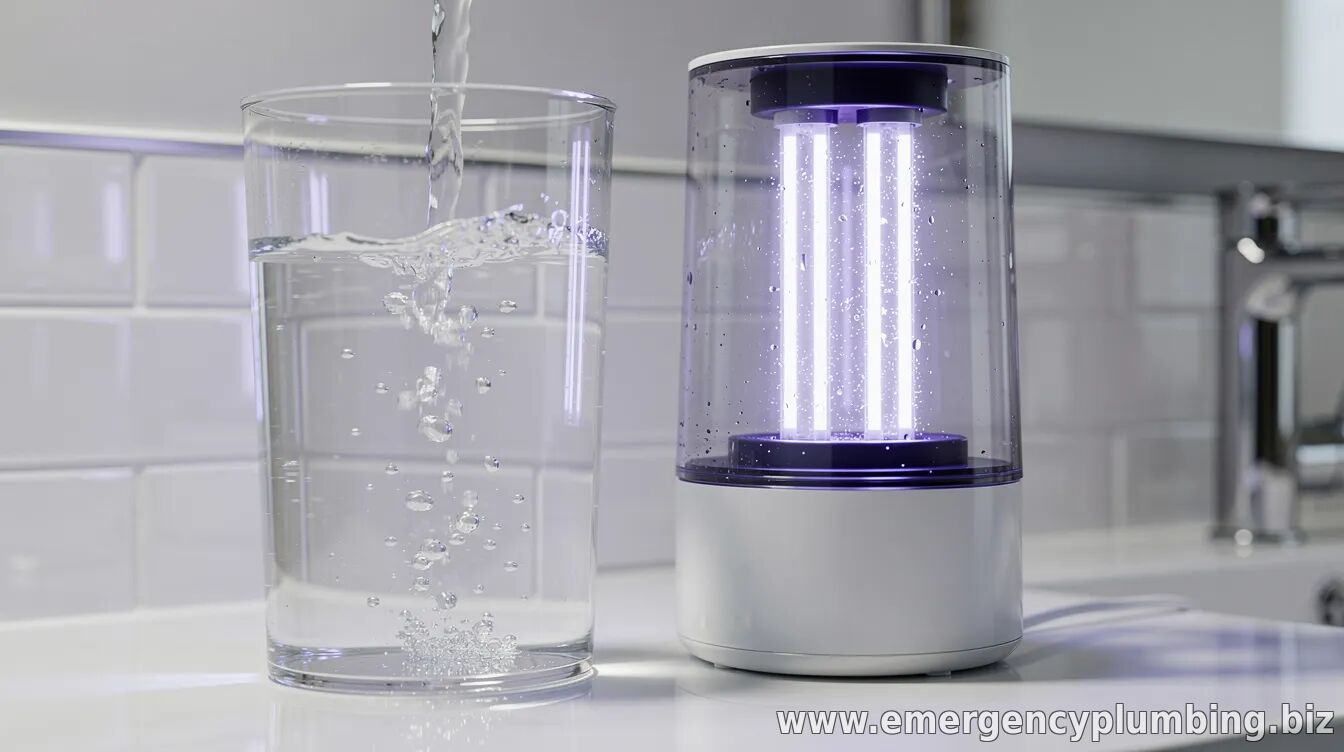
UV Water Purification: How It Works and When You Need It
UV water purification is a point-of-use (POU) or point-of-entry (POE) treatment method that uses ultraviolet light to deactivate microorganisms in water. Unlike boiling, UV doesn’t rely on heat; unlike chemical disinfection, it typically leaves no taste or smell. For households, travelers, and some facilities, UV has become a go-to option when reliable microbial control matters.
The core idea is simple: expose water to the right dose of UV radiation so that pathogens can’t reproduce. In most UV systems, water flows through a chamber where a UV lamp emits UV-C light (commonly around 254 nm), which targets the DNA and RNA of bacteria, viruses, and some protozoa.
How UV water purification works
In practice, a UV unit is built around four elements: a UV lamp (the UV source), a quartz sleeve (to protect the lamp while allowing UV transmission), a flow path (so water passes through the treatment zone), an ... Read more »
Comments
Post a Comment